The nuclear company that started with a LinkedIn message
Nuclear Turbines has raised £15 million to build a reactor small enough to sit inside a factory. Two years ago it was an idea and a cold LinkedIn message. This is how we built the company around it.
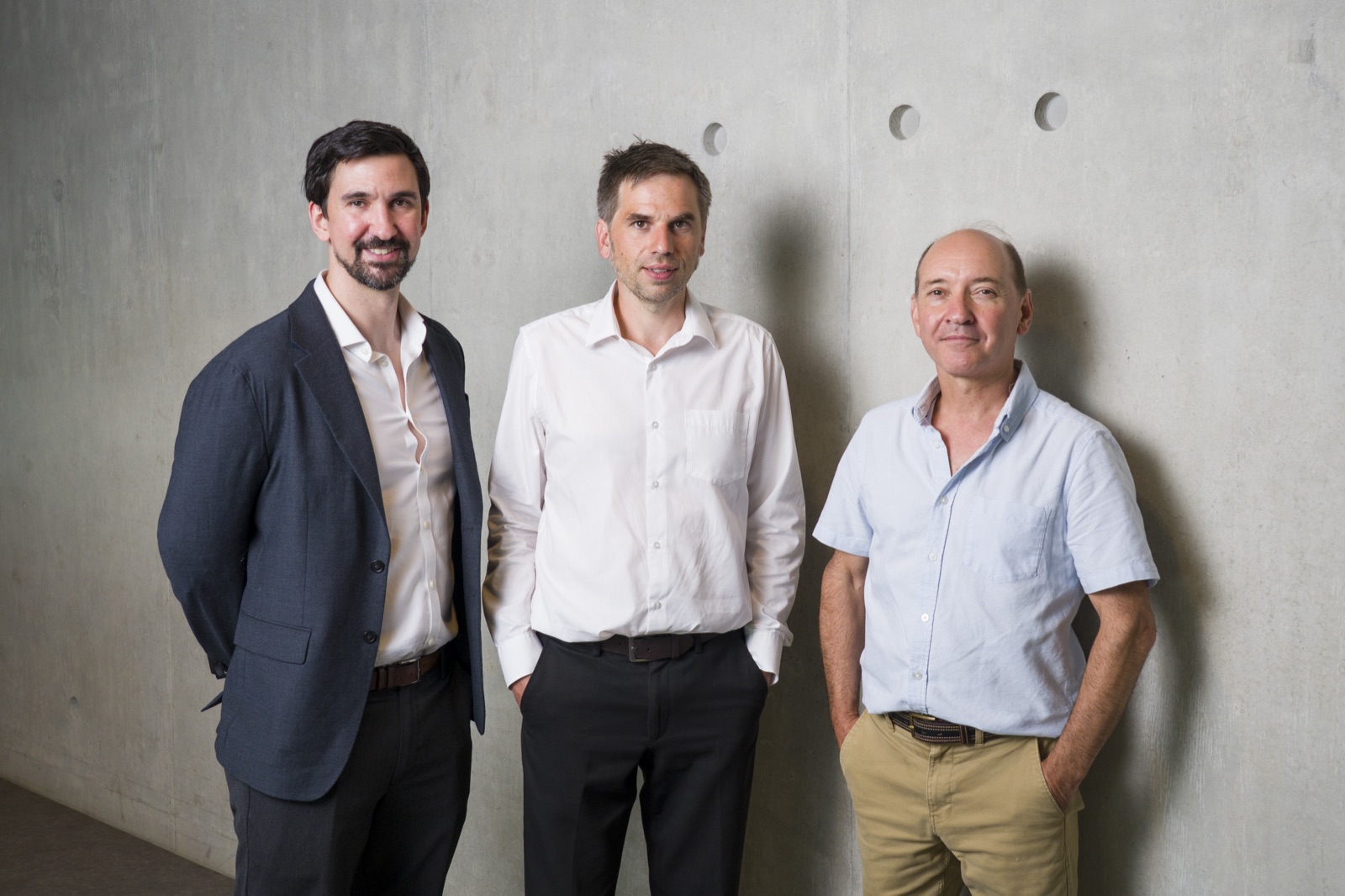
Nuclear Turbines has raised £15 million in its first major funding round. The Manchester company is building a new kind of nuclear reactor, small enough to sit directly at a factory or a data centre. I have been working alongside Jeremy and Tim since 2024, when we built the company together through the Empirical Ventures Studio.
It started with a cold message. In 2024, Dr Jeremy Owston, then a Principal Engineer at BAE Systems, and Professor Tim Abram, a nuclear engineer at the University of Manchester, sent me a note on LinkedIn. They had an idea, and a suspicion it could be an interesting company. BAE had decided that developing a nuclear reactor in-house was not part of their core business. Jeremy and Tim wanted support launching a business around it.
That is what I do.
Most reactor inventors get fascinated by how to build a more complicated reactor. Jeremy and Tim did the opposite.
They started from the commercial question, what is the cheapest way to generate electricity at scale, and then worked backwards to design a reactor that could deliver it. It is the same first-principles instinct that led Musk to rebuild Starship in stainless steel instead of carbon fibre: once you go back to the fundamentals of cost, the rest of the design has to follow. That kind of thinking, across technology and economics at the same time, is exactly what I had been looking for in a nuclear founder to partner with.
How we built it
There was no company yet. There was a technology sitting inside a defence contractor that had decided not to pursue it, two excellent engineers, and a thesis about cost. Everything else had to be made.
I led the negotiation with BAE Systems and their Launchpad programme to spin the technology out and licence it into a new company. We proved the market opportunity and built the techno-economic model that showed the thing could actually be cheaper than the alternatives. We assembled the company and its advisory board. And we did the less glamorous work too, all the way down to the logo.
A large part of it was upskilling: taking world-class scientists and engineers and giving them the commercial capabilities that research training leaves out. This is the part people underestimate. I act as a co-founder, with a PhD and a commercial track record, until the founders no longer need one.
Then we invested, and took the opportunity to investors around the world.
What they actually built
Nuclear Turbines is a fundamental redesign of what sits inside a nuclear power station. Jeremy and Tim have replaced the steam turbine at the heart of every existing nuclear plant with a high-temperature gas turbine, of the kind used in jet engines and modern gas-fired power stations. The reactor is designed around that turbine, rather than the other way round, which removes the steam infrastructure that has made conventional nuclear prohibitively expensive.
Today's reactors generate electricity by boiling water into steam to drive a steam turbine. Steam turbines became the nuclear default because they work with the low-temperature heat that water-cooled reactors produce, but they are large and relatively inefficient. They need big tanks and boilers, heat exchangers and complex cooling systems, all capable of handling high-pressure water safely. That makes them expensive to build and very difficult to shrink to an economically viable size.
Gas turbines are a different proposition. They power aeroplanes and every gas-fired power station, converting extremely hot air directly into power with very little energy loss. They are highly efficient, compact, and economically viable at small scale. The catch is that they have never been suitable for conventional nuclear reactors, which cannot heat air to the temperatures a gas turbine needs. High-temperature reactors typically rely on graphite, and graphite burns when exposed to air.
The novel reactor design bypasses the need for graphite altogether. That means it can harness the efficiency of gas turbine technology for the first time, run at higher temperatures, and solve the scale and cost problems that come with steam.
Why the timing matters
British electricity prices are already among the highest in Europe, with businesses paying around 50 per cent more than their counterparts in France and Germany. Prices are forecast to rise a further 24 per cent this autumn. Reindustrialisation, the AI build-out, and the 2030 clean energy target all depend on power this country cannot currently deliver at anything like the required cost.
The regulatory picture is opening at the same time. In November 2025 the government-commissioned Fingleton Review called for a radical reset of UK nuclear regulation, describing the current system as rooted in unnecessary complexity and a mindset that favours process over outcome. That bottleneck has held back exactly the kind of new reactor designs Nuclear Turbines is now bringing forward. Alongside the Advanced Nuclear Framework and the Clean Energy Industries Sector Plan, the ground is shifting. Britain is also building the only uranium enrichment facility outside Russia capable of producing the high-assay fuel that reactors like this one will require.
If the technology scales as designed, the implications for the Northwest and for British industry more broadly are significant. Compact reactors sited directly at industrial facilities would give steel, chemicals, advanced manufacturing and data-centre operators a route to cheap, clean power that does not depend entirely on grid connections or long-distance transmission. The entire supply chain could sit in Britain.
What happens next
The round was led by IQ Capital, the largest deep-tech fund in the UK, and we were delighted with who came in alongside them: Rhapsody Venture Partners, a US fund with real depth in deep tech and engineering, and Zero Carbon Capital. Alongside the funding, Nuclear Turbines has appointed Lauren Dickerson, formerly Strategy Director at Centrica, as Chief Commercial and Strategy Officer.
The money goes into validating the reactor design, building large-scale test rigs, and expanding the team as the company prepares to manufacture its first fuel elements.
The nuclear industry has always designed reactors first, then figured out what to do with the heat. We flipped that: we started with the cheapest way to generate power and designed a reactor to fit.Dr Jeremy Owston, co-founder, Nuclear Turbines
This is exactly what the Studio was built for. A technology that would otherwise have stayed on a shelf, two engineers who understood it better than anyone, and all the missing scaffolding in between. Deep science does not commercialise itself, and it rarely fails because the science was wrong.
If you are a scientist sitting on something like this, I would like to hear about it.